The dead annex the living
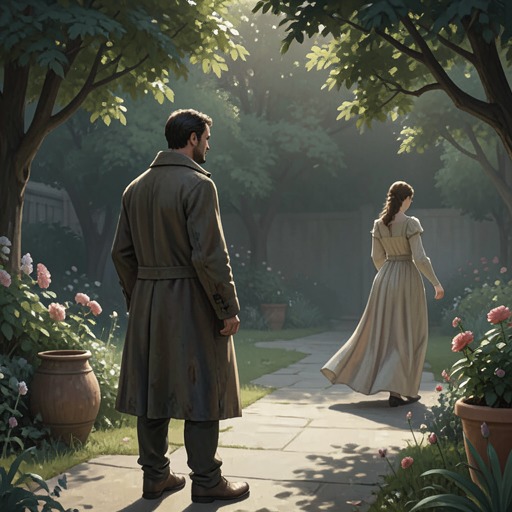
In Search of Lost Time“The dead annex the living” names the paradox that death can alter and inhabit the lives of those who remain. At Balbec, the narrator’s involuntary recovery of his grandmother’s living presence makes him recognize his loss more than a year after her burial; later, his mother’s mourning appears as a gradual transformation into her mother’s replica and successor. The expression joins memory’s sudden returns to grief’s inheritance: the dead persist not as an unchanged presence, but through the living minds and bodies that re-create and continue them.
The return of the grandmother
On the first night of the narrator’s return to Balbec, cardiac fatigue brings back an earlier scene. As he bends to unfasten his boots, the sensation restores the face of his grandmother stooping to help him on their first evening there. The recollection is involuntary and complete: for the first time since her stroke on the Champs-Élysées, he recovers her as a living person, not as the diminished figure he had carried in his thoughts after her death.
The return does not console him without cost. His longing to throw himself into her arms collides with the knowledge that she is dead, and he understands the loss only when the memory has made her tenderness present again. The recovered self is the grandson who once sought refuge in her embrace; from that self’s closeness to her, her permanent absence becomes newly unbearable. Memory restores the bond and exposes its irreparable ending at the same moment.
Memory, time, and the self
The narrator explains that past joys and sorrows may remain within a person without being available to consciousness. They are preserved in an unknown region, often displaced by memories incompatible with them. When the original context of sensation returns, a memory can again take possession of the mind and exclude the self that had been living in the meantime.
Thus the scene at Balbec does not feel like a recollection placed neatly after the present. The narrator experiences himself as the person who had existed on that first evening, with no interval between the old moment and its renewed life. His account unsettles the ordinary sequence of calendar time: the fact of his grandmother’s death preceded the grief that he could feel only after memory re-created her. The expression’s force lies in this temporal reversal—the dead become effective in the present when the living recover the feelings they had not known they had lost.
The mother as successor
When the narrator’s mother arrives at Balbec in mourning, he sees that grief has changed her. Her former gaiety has given way to a grave, imploring stillness; she seems hesitant to disturb the sorrowful presence that accompanies her. Most strikingly, he recognizes not simply his mother but his grandmother in her. Bereavement, he suggests, has hastened a metamorphosis that might otherwise have unfolded gradually.
The inheritance is both outward and inward. The mother’s resemblance becomes more visible as she ceases to exercise some of the qualities that had distinguished her, including the common sense and mocking gaiety she had inherited from her father. The dead woman’s traits, already latent in her daughter, come forward as the daughter’s grief changes what she expresses and admires. In this sense, the dead annex the living: the survivor becomes a continuator of a life interrupted by death, not through literal identity but through altered habits, features, and attachments.
Objects, imitation, and continuing influence
The mother’s mourning attaches itself to things her mother used and loved. Her grandmother’s bag and muff become precious; she will not part with the clothes that emphasize their physical resemblance, or with the copies of Mme de Sévigné’s writings her mother carried everywhere. The three letters she sends before arriving at Balbec quote Mme de Sévigné as though the grandmother were speaking through her. On the beach, the daughter carries her mother’s sunshade and walks with timid, reverent steps where her mother had walked; she returns there daily to read the same favorite books.
These acts make grief visible as repetition. They do not restore the dead woman, and the narrator recognizes that other people’s words or silences about her may express much the same indifference. What gives the objects and gestures their force is the mother’s attachment to them: they preserve a relationship by making its routines and preferences present in another person’s life. The dead continue to act because the living take up what mattered to them and make it part of their own conduct.
Grief’s unequal rhythms
The narrator distinguishes his own delayed, memory-triggered grief from his mother’s prolonged bereavement. He recognizes that his sorrow arrives only when he can understand the death through recovered feeling, whereas his mother’s grief has already shaped her life. His belated recognition allows him, for the first time, to understand something of the contradiction her blank, tearless gaze has expressed: memory insists on the beloved person’s reality while death confirms her non-existence.
The expression therefore does not promise that the dead survive intact or that grief abolishes loss. Its claim is more unsettling: death can make the living resemble, imitate, and carry forward the person who is gone, while the returning force of memory makes absence newly real. The grandmother’s life persists in the narrator’s recovered love and in his mother’s changed presence, but each persistence also bears witness to the separation that made it necessary.